
Population
A foundation for insights to address strategic challenges related to population and planetary health.
Photo by Ishan @seefromthesky on Unsplash
As global temperatures rise, the negative effects are felt disproportionately in areas where resources are already constrained.
Global surface temperature change relative to the period 1850–1900 in degrees Celsius

Source: IPCC 2022
*Shared Socioeconomic Pathways (SSPs) are climate change scenarios of projected socioeconomic global changes up to 2100.
With rising temperatures, wasting in children due to malnutrition is expected to increase.
Percentage of children under 5 experiencing childhood wasting* in low- and middle-income countries

Source: Unicef
*Child wasting refers to children who are too thin for their height and is the result of recent rapid weight loss or the failure to gain weight.
IHME, Planet Labs, and Microsoft AI for Good Lab are working together to generate up-to-date estimates of population density at highly local levels.

High-resolution maps overlaid with climate data will allow us to understand where people are living in severely climate-stressed zones.
Population exposure to extreme climate stress* in Kenya, 2015–2100**
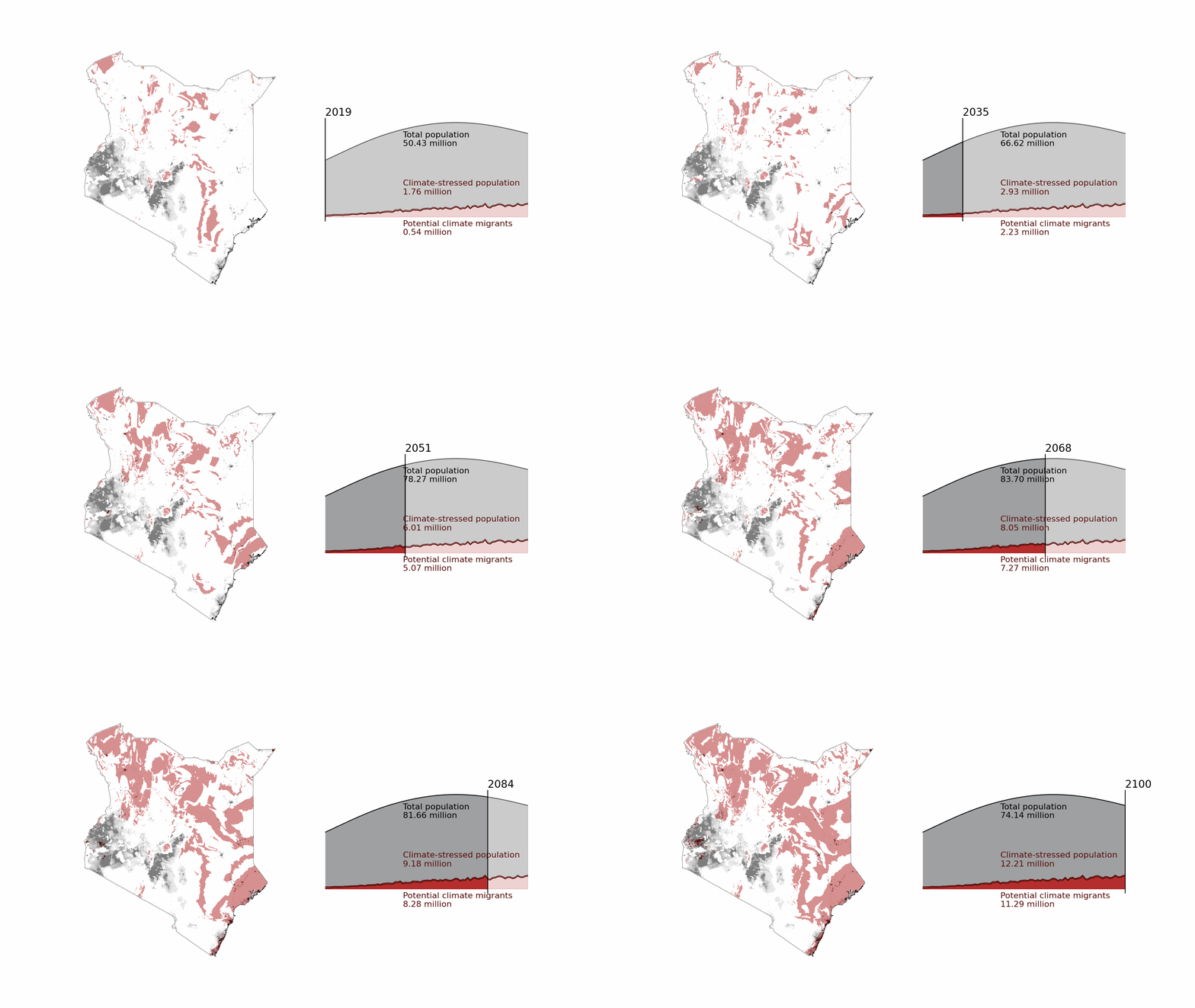
*IHME uses a human climate niche analysis to determine a country-specific climate threshold for extreme climate stress.
**The forecasts assume SSP2 - RCP4.5 conditions: moderate future greenhouse gas emissions coupled with some climate protection measures in place.
Detailed population maps create a foundation for data layers that will inform anticipatory action.
Paired with population data, other datasets will be layered on to address strategic questions.

Contact us to discuss this project and how the data can be actionable for you.
If you would like to learn more, please email IHME’s Bill Heisel, Executive Director of Global Services, at [email protected].


