HIV/AIDS
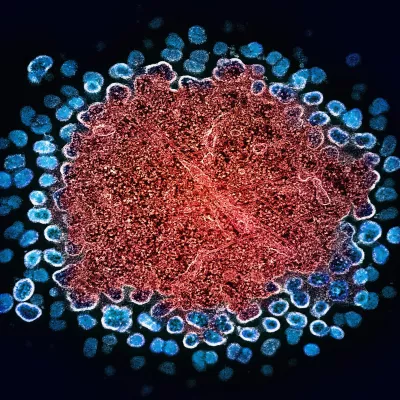
HIV (human immunodeficiency virus) is a virus that attacks the body’s immune system. If HIV is not treated, it can lead to AIDS (acquired immunodeficiency syndrome).
Photo by Kevin Lamarque, Reuters.
833,408
HIV-related deaths occurred globally in 2023.
42 million
people were living with HIV in 2023.
72%
of people living with HIV in 2023 lived in sub-Saharan Africa.
Key findings
The overall HIV infection rate has been falling globally, in part thanks to intervention techniques.
Some examples of successful interventions for HIV include:
- Antiretroviral therapy (ART)
- Prophylaxis
- Prevention of vertical (mother-to-child) transmission
Over the past 20 years, HIV has become a manageable chronic illness for people who can be tested and treated. There are still significant inequities in access to care across the globe, which must be addressed.
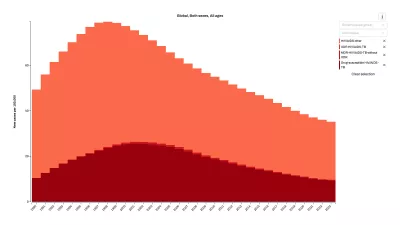
Although global deaths from HIV/AIDS reached their peak in 2004, over 40 million people are living with HIV worldwide.
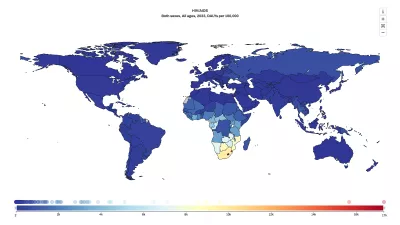
As of 2023, sub-Saharan Africa is the region most disproportionately affected by HIV/AIDS, accounting for
- 74% of global HIV-related deaths with just over 30 million prevalent cases.
- 67% of new HIV infections at 1.4 million new infections. (source for both)
Women in the region carry much of the burden with 63% of prevalent cases in 2023.
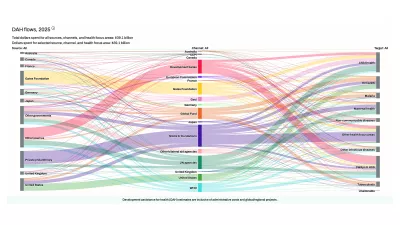
Development assistance for health (DAH) funding for HIV/AIDS was $4.75 billion in 2025.
- Spending on HIV/AIDS has decreased by $3.4 billion since 2024.
- About 13% of total 2025 DAH went to combat HIV/AIDS.
- The largest sources of DAH for HIV/AIDS in 2025 were the United States and private philanthropies.
News and media
Q&A: HIV-related mortality among children and adolescents on antiretroviral therapy
Last updated
September 3, 2025