
Neurological conditions
Estimating the global burden of neurological conditions aids policymaking and helps to lift brain health onto the public health agenda.
Photo by Jesse Orrico, Unsplash
Key findings
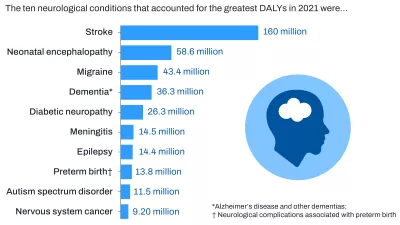
Neurological conditions were responsible for 443 million years of healthy life lost in 2021
This made neurological conditions the top contributor to the global disease burden, ahead of cardiovascular diseases, causing illness, disability, and premature death (disability-adjusted life years, or DALYs).
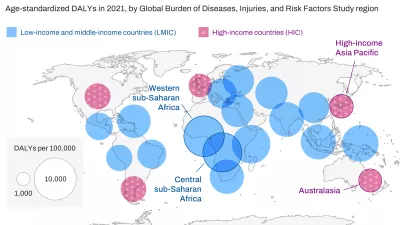
Over 80% of deaths and health loss from neurological conditions occur in low- and middle-income countries (LMICs)
This difference is partly due to more health loss from conditions affecting newborns and children under the age of 5 years, such as neonatal encephalopathy, meningitis, and neural tube defects, all three of which rank notably higher in LMICs than in high-income countries (HICs).
More key findings and data in our study, Global, regional, and national burden of disorders affecting the nervous system, 1990–2021, published in The Lancet.
Get the facts on brain health around the world
Using a science-based approach to quantify the present burden, future trends, and economic impact of brain health conditions, the Brain Health Initiative aims to leverage data to guide policy change.
Learn more about neurological conditions
This diverse group of conditions includes congenital and neurodevelopmental disorders, cerebrovascular and neurodegenerative diseases, neurological infections, neurological–immunological disorders, neuromuscular or peripheral nervous system disorders, traumatic injuries, and cancers of the nervous system. For brevity, IHME summarizes these as neurological disorders or nervous system conditions.
These disorders vary in cause, symptoms, and course. Some nervous system conditions cause lifelong disability, whereas others are associated with high fatality rates; some are treatable or preventable, whereas for others there is no cure.
There are 37 health conditions that cause neurological health loss. IHME groups the following primary neurological conditions together in the Global Burden of Disease (GBD) study:
- Alzheimer’s disease and other dementias
- Epilepsy
- Migraine
- Motor neuron disease
- Multiple sclerosis
- Parkinson’s disease
- Tension headache
- Guillain-Barré syndrome
- Other neurological disorders (residual category)
The 10 nervous system conditions with the highest burden 2021 were stroke, neonatal encephalopathy, migraine, Alzheimer’s disease and other dementias, diabetic neuropathy, meningitis, epilepsy, neurological complications due to preterm birth, autism spectrum disorder, and nervous system cancers.
Neurological conditions disproportionately impact low-income and middle-income countries, where access to treatment and rehabilitation services remains limited. This difference is partly due to the health loss affecting newborns and children under the age of 5 years, such as neonatal encephalopathy, meningitis, and neural tube defects, all three of which rank notably higher in LMICs than in HICs (high-income countries). Generally, males are at higher risk of neurological conditions than females. However, differences between conditions exist.
Recent research suggests that modifying 18 risk factors over a person’s lifetime—most importantly high systolic blood pressure (57% of DALYs)—could prevent 84% of global DALYs from stroke.
Additionally, estimates suggest that controlling lead exposure could reduce the burden of intellectual disability by 63%, while reducing high fasting plasma glucose to normal levels could reduce the burden of dementia by around 15%. Identifying and quantifying the impact of modifiable risk factors is an ongoing goal of the GBD study.