Partnerships
Explore our global partnerships
We partner with over 50 institutions around the world.
Link to map that shows locations of organizations that share partnership agreements with IHME
Partner spotlights
The following are examples of partnerships that IHME has undertaken to accelerate progress toward our mission and vision.

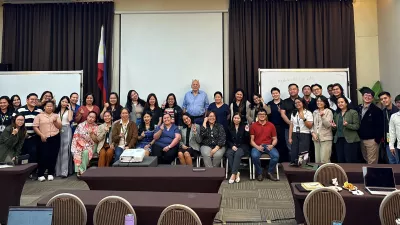
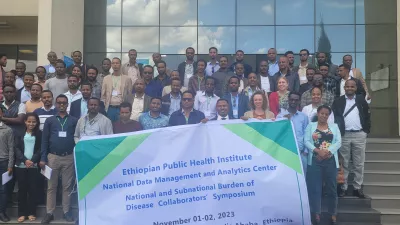
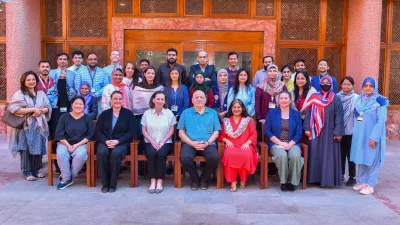
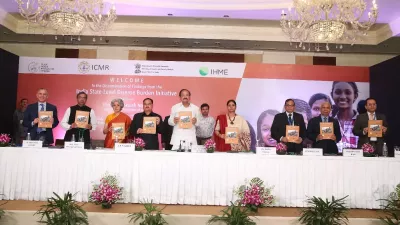
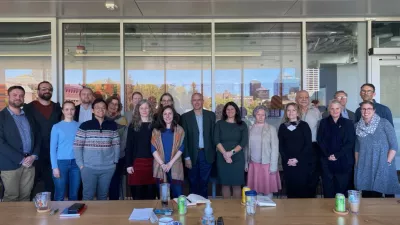
The Africa Centres for Disease Control and Prevention (Africa CDC) and IHME collaborate to enhance the use and policy relevance of health metrics research in Africa, improve data sharing and accessibility, and strengthen capacity to enhance health outcomes. Together, Africa CDC and IHME have implemented a series of regional workshops on GBD and are writing manuscripts and reports on priority diseases, training Africa CDC staff, and hosting evidence translation workshops.
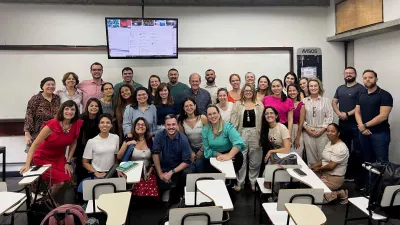
The Federal University of Minas Gerais (UFMG) and IHME have been in partnership for more than 10 years, working together to drive use of the GBD for policy development, to support research on key topics impacting the health of Brazilians, and to provide learning opportunities for health professionals across the Portuguese-speaking world. UFMG and IHME work to coordinate the Brazil GBD Network, a collaboration of more than 200 researchers across research institutes, universities, and the Ministry of Health. This collaboration has led to the development of a number of resources designed to support the wider dissemination of GBD data through mediums such as the Portuguese-language GBD Brazil website and GBD Compare. UFMG has worked with IHME to develop numerous important publications focusing on key health topics for Brazil including the burden of interpersonal violence against women, road traffic injuries and death, and trends in mortality due to tobacco use.
The Global Research on Antimicrobial Resistance (GRAM) Project is a partnership between the University of Oxford and IHME to provide rigorous quantitative estimates of antimicrobial resistance (AMR) burden; to increase global, regional, and country-level awareness of AMR; to boost surveillance efforts, particularly in low- and middle-income countries (LMICs); and to promote the rational use of antimicrobials worldwide.
The Instituto Nacional de Saúde (INS) and IHME collaborate to enhance the use of Global Burden of Disease (GBD) results in Mozambique, strengthen data analysis capacity, and improve evidence-based policymaking. Together, INS and IHME are engaging in GBD trainings, assessing Mozambique's health data landscape, updating national burden of disease estimates and exploring causes with significant policy relevance such as maternal mortality to support the use of evidence in decision-making.
IHME and the International Diabetes Federation (IDF) work together to ensure a mutually comprehensive understanding and review of data and methods for diabetes, and to share knowledge and results from the global estimates produced by both IDF and the Global Burden of Disease study. We jointly engage with content and country experts to strengthen our understanding of new developments within the diabetes research community.
The MINSAL/IHME partnership aims to:
- Strengthen the estimation of disease burden in Chile and build sustainable national capacities.
- Consolidate a long-term collaboration to ensure that Chile has high-quality scientific evidence to address its most pressing health challenges.
- Prioritize the regular exchange of data and methodological transfer between IHME modeling teams and Chilean professionals.
- Improve the accuracy of data and ensure that the evidence generated is effectively translated into public policies that improve the quality of life for citizens.
The collaboration is structured around two main pillars:
- Optimization of estimates: Direct collaboration to share data and strengthen periodic measurements of population health status.
- Institutional strengthening: Development of national technical competencies so that MINSAL officials can perform disease burden modeling according to the international standards of the GBD project.
The Ministry of Health (MOH) of Türkiye, the Health Institutes of Türkiye (TÜSEB), and IHME began a formal partnership in 2025 using global burden of disease evidence to help build institutional capacity and advance population health research.
The MOH is the main governmental body responsible for policymaking and for regulating and providing both population health and health care services in Türkiye with the mission of protecting the population’s health.
TÜSEB was established to advance Türkiye and humanity in the fields of health sciences and technologies, while also promoting planned and sustainable development.
Through joint training and scientific collaboration, the partnership aims to provide evidence that can inform policymaking and priority setting. Key areas of focus include estimating the burden of disease, forecasting health spending, and evaluating health system performance.
On February 24, 2026, IHME signed a new memorandum of understanding (MOU) with the Mongolia National Center for Public Health (NCPH) during Director Dr. Lkhagva Battur’s visit to the Hans Rosling Center. This partnership will focus on integrating critical national data into the GBD Study, collaborating on scientific publications, building capacity, and translating GBD findings to inform Mongolia’s national public health strategies.
The Center for Global Health Inequities Research (CHAIN) based at the Norwegian University of Science and Technology (NTNU) is a leading center in interdisciplinary research of global health inequalities and health determinants. CHAIN and IHME are exploring the global association between social determinants of health and mortality, with the goal of including low education as the first socioeconomic risk factor in the Global Burden of Disease study.
All partners
IHME collaborates with a broad range of partnerships around the world. We have formalized partnerships through memorandums and contracts with the following institutions: