Suicide and self-harm
Every 2 minutes, 3 people die due to suicide. By working together at the community level, we can prevent suicide and self-harm through awareness, intervention, and support systems.
Need support and living in the US?
If you or someone you know is experiencing thoughts of suicide, text, call, or chat 988. The 988 Lifeline offers 24/7 judgment-free support for mental health, substance use, and more. Access for Deaf/HoH and Spanish speakers.
Key findings
Every minute, 4 males and 6 females need inpatient treatment due to suicide attempts.
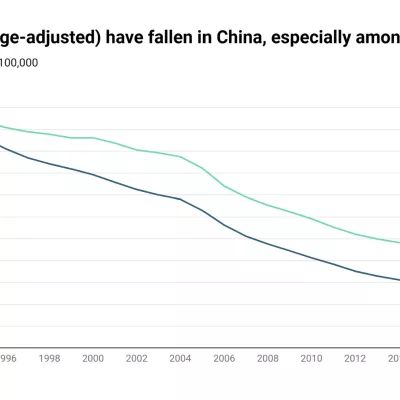
As of 2023, global rates of suicide are decreasing.
The number of suicide deaths increased from 1990 to 2023, but the rate decreased.
The age-standardized death rate in males decreased by 25% and in females by 51% from 1990 to 2023. The age-standardized incidence of suicide also decreased but by much less than death for males 22% and for females 38%.
Annual percent change of global age-standardized suicide death rates from 1990 to 2023, both sexes
Globally, the mean age of death due to suicide was 47 years in 2023, an increase of 4.4 years from 1990.
Observed median age at death due to self-harm in 2023, by Global Burden of Disease super region
Females attempt suicide more often than men, but males die by suicide at much higher rates.
This is known as the "gender paradox" in suicide. There are some key factors for this:
- Method of suicide (lethality factor): Males tend to use more violent and lethal methods (firearms, hanging, jumping), which result in a higher fatality rate. Females are more likely to use poisoning, overdosing, or self-harm, which have higher survival rates and allow for medical intervention.
- Impulsivity vs. planning: Female's suicide attempts are often more impulsive and tied to emotional distress, relationship conflicts, or immediate crises. Male’s suicides tend to be more planned and involve a stronger intent to die, increasing their chances of success.
- Help-seeking behavior: Females are more likely to seek help from friends, family, or mental health professionals before or after a suicide attempt. Males often avoid seeking help due to societal expectations of "toughness," which means their distress remains hidden until it's too late.
- Social support and coping mechanisms: Females generally have stronger social networks and may find emotional support from friends or loved ones, which can help them survive attempts and recover. Males often face social isolation and may turn to alcohol, aggression, or self-harm instead of reaching out for help.
- Mental health and coping differences: Females have higher rates of depression and anxiety, which are strongly linked to suicidal behavior. Males have higher rates of substance abuse and impulsivity, which can increase suicide risk and make their actions more fatal.
- Cultural and societal expectations: Society often pressures males to be self-reliant, emotionally strong, and in control, making it harder for them to express distress. Females are more likely to express emotions and seek emotional relief, leading to more attempts but fewer deaths.